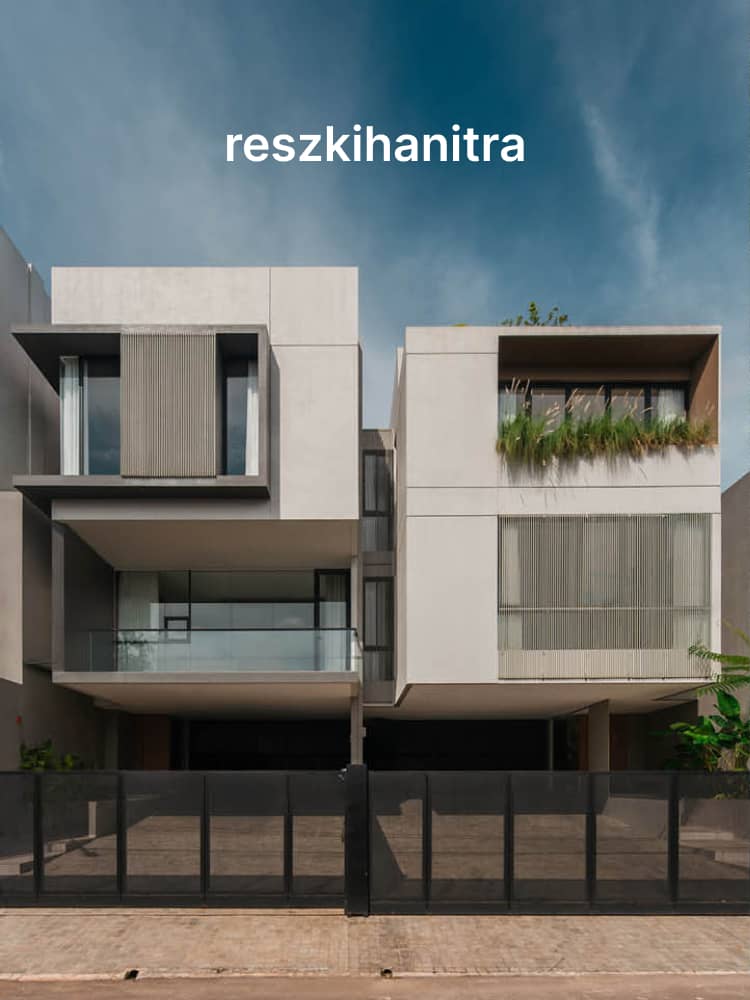
Reszki Hanitra
Designed and developed a personal portfolio website for Reszki Hanitra the architect. Focused on creating a minimal, high-impact digital presence to showcase their work and biography.
Role
Year
Deliverable
Website
Tech Stack
Core Challenge
- Balancing an image-heavy architectural photography portfolio with the critical need for lightning-fast, near-instant page load speeds.
- Providing zero-friction content autonomy for a non-technical client without building a complex, heavy, or high-maintenance custom CMS dashboard.
Key Impact
- Achieved exceptional performance metrics and near-instant Time-to-Interactive (TTI) via Next.js Static Site Generation (SSG).
- Delivered 100% client autonomy, enabling seamless portfolio updates directly through a standard Notion database with zero ongoing development overhead.
Lessons Learned
- Pragmatic engineering often means leveraging existing user workflows rather than building custom UI—Notion functions perfectly as a headless CMS for independent creators.
- Static generation combined with automated native image optimization pipelines offers the perfect balance between high-fidelity visual assets and elite web performance.
The Visual Performance Paradox
Reszki Hanitra, a Jakarta-based architect, required a professional digital portfolio to showcase his body of work.
- The Challenge: Architecture portfolios are inherently image-heavy. Traditional website builders often struggle to balance high-resolution imagery with fast load times, leading to a sluggish user experience.
- The Constraint: As a non-technical creative, the client needed a way to frequently update his project list and biography without touching a single line of code or navigating a complex, bloat-heavy CMS dashboard like WordPress.
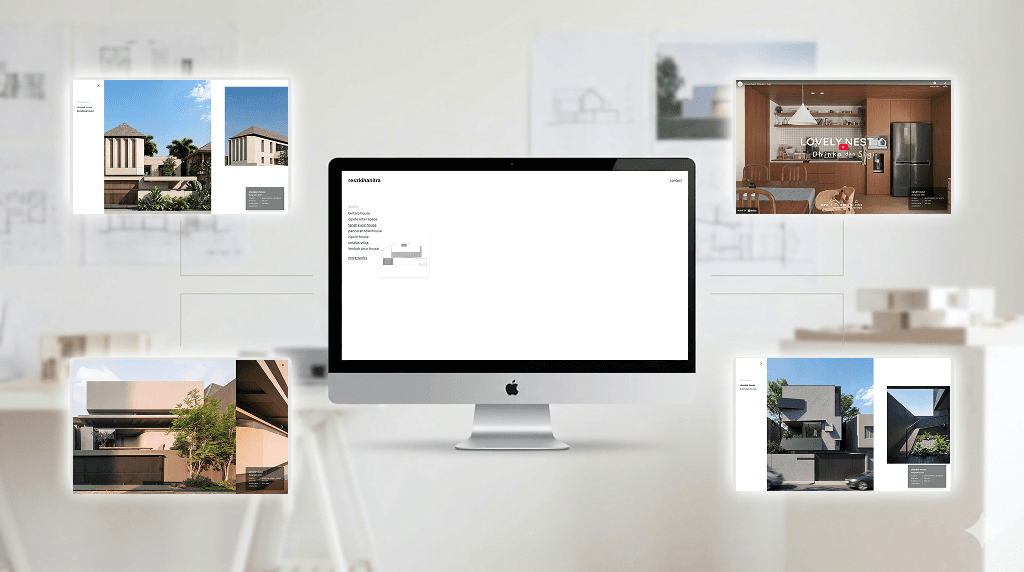
Digital Minimalism: A high-performance canvas where code recedes to let the architecture take center stage.
Engineering "Invisible" Design
The objective was to build a bespoke platform that served two distinct masters:
- For the Visitor: A seamless, blazing-fast browsing experience where the interface recedes to let the architectural work take center stage ("Minimalism & Usability").
- For the Client: A zero-friction content management workflow that fits into his existing daily routine.
A Headless, Content-First Architecture
I implemented a Headless CMS architecture designed for speed and ease of use.
1. Performance-First Frontend (Next.js + Tailwind)
- Next.js (SSG): I utilized Static Site Generation to pre-render pages. This ensures that even with heavy architectural photography, the site achieves near-instant Time-to-Interactive (TTI) metrics.
- Image Optimization: Leveraged Next.js's native image optimization API to automatically serve correctly sized and compressed images based on the user's device, ensuring crisp visuals without the bandwidth penalty.
- Tailwind CSS: Crafted a custom, lightweight design system that mirrors the architect's own minimalist aesthetic, avoiding the "cookie-cutter" look of standard templates.
2. The "No-CMS" CMS (Notion API)
- The Strategy: Recognizing that the client manages project data in structured documents, I rejected traditional CMS platforms in favor of the Notion API.
- The Workflow: I built a synchronization pipeline where the client simply adds a new row to a Notion database (uploading images and typing descriptions there). The website automatically fetches this data at build time. This allows the client to update their portfolio from their phone or laptop using an app they already know and love.
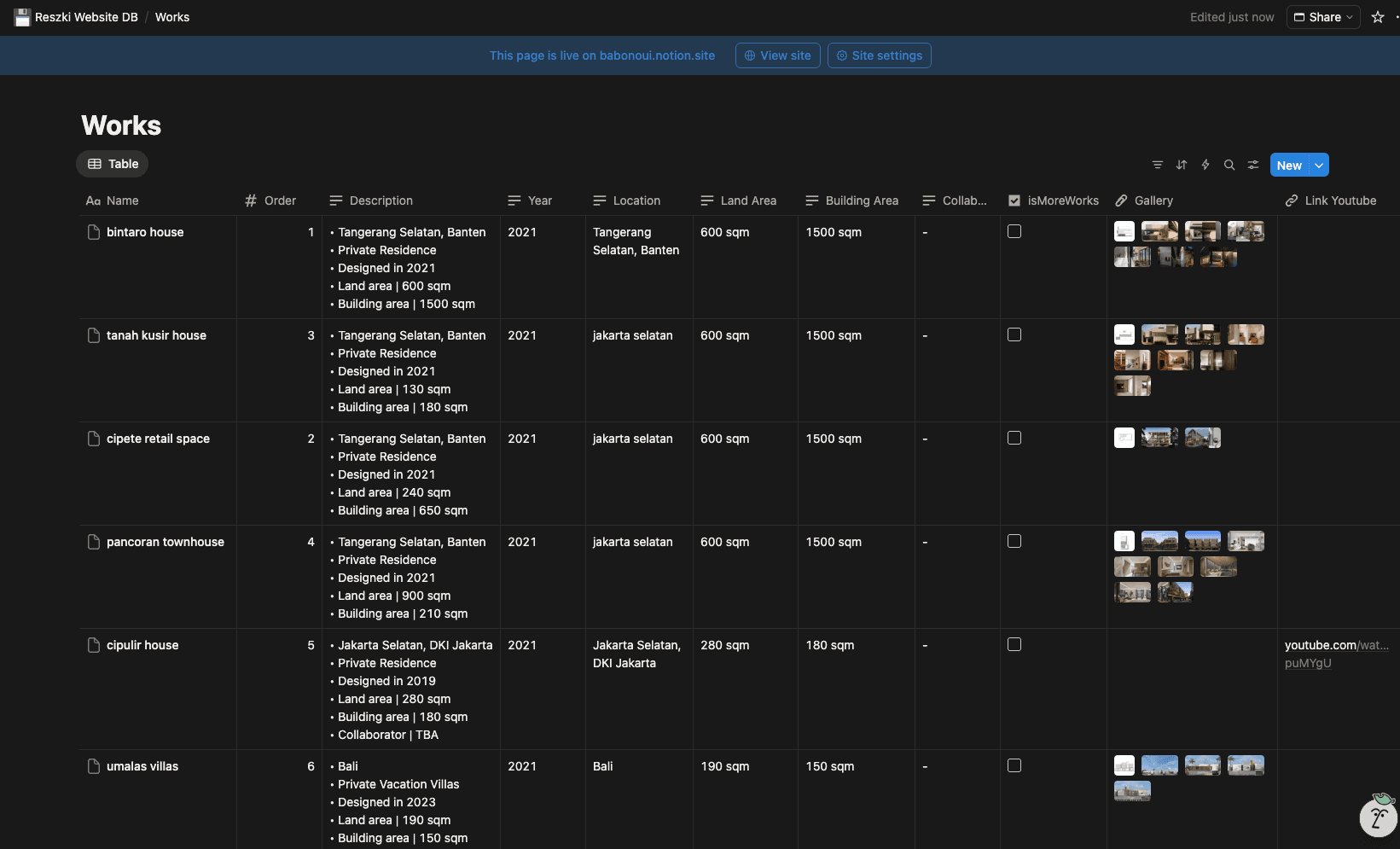
Zero-Friction Management: Using Notion as the database for easy content updates.
High Impact, Low Maintenance
The solution delivered a high-performance digital identity that bridges the gap between design and engineering:
- User Experience: The site achieves a perfect balance of aesthetic minimalism and technical performance, with instant page transitions.
- Client Autonomy: The client has successfully maintained the blog and project sections independently via Notion, eliminating the need for ongoing developer maintenance for content updates.
- SEO: The static architecture ensures excellent crawlability, helping the portfolio rank for local architectural keywords.