
Micron
Spearheaded the design and full-stack development of an AI-driven dashboard for Micron Technology as part of a Master's Capstone Consulting Project. Leveraged AI to optimize supply chain risk management and predict Weeks of Supply.
Role
- Fullstack Developer
- Product Designer
Year
Deliverable
- AI-Driven Supply Chain Dashboard
- Design Guideline
Website
Tech Stack
Core Challenge
- Transforming Micron's complex, reactive supply chain data into an actionable, predictive system capable of forecasting Weeks of Supply (WoS) and identifying risks before they happen.
- Architecting a dual-engine platform that balances computationally heavy Python data modeling with a highly responsive, enterprise-grade Next.js frontend user interface.
Key Impact
- Successfully delivered SupplySense, an AI-driven prescriptive dashboard integrating XGBoost, ARIMA, and Monte Carlo simulations to drastically reduce procurement lead times.
- Streamlined executive decision-making by embedding Gemini API insights to translate complex predictive data anomalies into plain-English supply chain summaries.
Lessons Learned
- Isolate heavy analytical prototyping from the core web app: using Streamlit for rapid analytics validation alongside a Next.js and FastAPI production stack optimizes both delivery speed and system stability.
- Prescriptive analytics tools are only as valuable as their clarity: data modeling must be accompanied by intuitive, plain-text AI insights to truly drive confident procurement decisions.
Overview
During my Master’s at NUS, I was selected for a capstone consulting project with Micron Technology’s supply chain team. We were a team of four acting as external consultants, and given my background, I was entrusted as the sole Technical Lead and Fullstack Developer for the engagement.
Micron needed to move from reactive to proactive management. Our objective was to build a 'Supply Management Insight Tool' that could perform predictive data modeling and recommend the ideal Weeks of Supply (WoS) for specific business areas. The challenge was to turn complex supply chain data into actionable, easy-to-read insights for procurement managers.
I took full ownership of the product delivery, wearing multiple hats to ensure a professional result:
- Architecture: I made a strategic decision to use FastAPI (Python) for the backend instead of Node.js to better handle the heavy data modeling, while using Next.js for a responsive frontend.
- AI Integration: I integrated the Gemini API to provide AI-driven insights, allowing the dashboard to explain trends in plain English.
- Product Design & Branding: Beyond the code, I also served as the Product Designer. I developed the comprehensive brand guidelines for the platform and our team identity to ensure the final deliverable wasn't just functional, but had the polished look and feel of a professional consulting product.
We delivered a fully functional MVP called SupplySense. The platform provided not just predictive, but prescriptive analysis which is it didn't just tell them what might happen, but suggested what they should do. The solution was projected to significantly reduce procurement lead times and increase the material consumption rate by accurately identifying which raw materials were critical for upcoming weeks. It was a strong demonstration of how modern web/AI architecture can solve traditional supply chain bottlenecks.
Key Features
.png&w=3840&q=75)
SupplySense: Visualizing the future of AI-driven supply chain management.
The final solution culminated in an AI-powered dashboard featuring several advanced analytical tools:
- Waterfall Analysis: A detailed week-by-week breakdown of inventory changes, comparing planned supply/demand against actual receipts and consumption to identify root causes of imbalances.
- Inventory Simulation: Utilizing Monte Carlo simulations to model inventory levels under various scenarios (inputs include initial stock, reorder points, and demand variability). This tool compares reactive vs. proactive ordering strategies to highlight potential stockouts.
- Forecast: A capability to predict future material demand based on historical consumption data using models like XGBoost and ARIMA, accounting for seasonality.
- Lead Time Analysis: Measures the duration between order placement and goods receipt to identify supplier delays or inconsistencies.
- Material Consumption & Order Analysis: specialized tools to detect outliers in usage patterns and visualize ordering trends across different plants and vendors.
Teams

Meet the team: Bridging Data (Madhih & Shonn), Business (Marcus), and Product (Akbar) to build SupplySense.
SupplySense is the result of a diverse collaboration: Madhih and Shonn powered our analytics engine using Streamlit for fast iteration, while Marcus ensured strategic alignment as our business lead. I complemented this by driving the Product Development, overseeing the journey from initial design concepts to the final full-stack implementation of the dashboard.
Development Flow
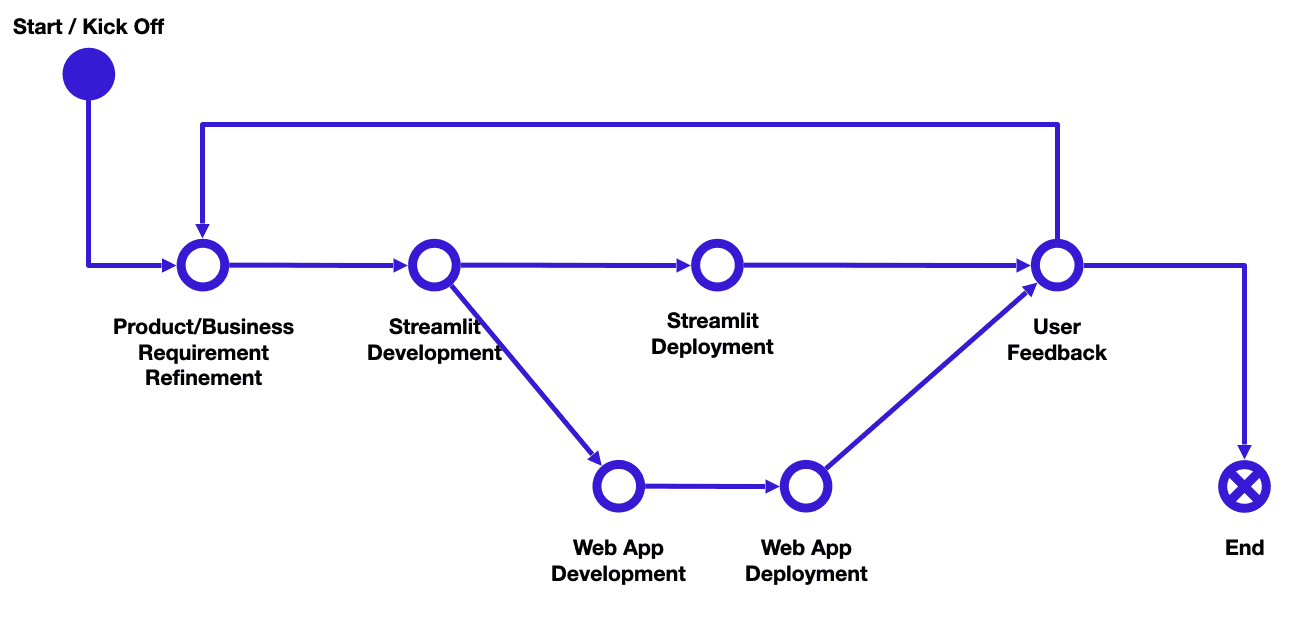
Our Agile Workflow
Our project methodology centered on an agile, dual-track approach. We utilized Streamlit for rapid prototyping and fast feedback cycles on analytical features, while concurrently developing the scalable web application. User feedback was continuously integrated, driving requirement refinements and ensuring the final product was both technically sound and business-aligned.
Tech Stack
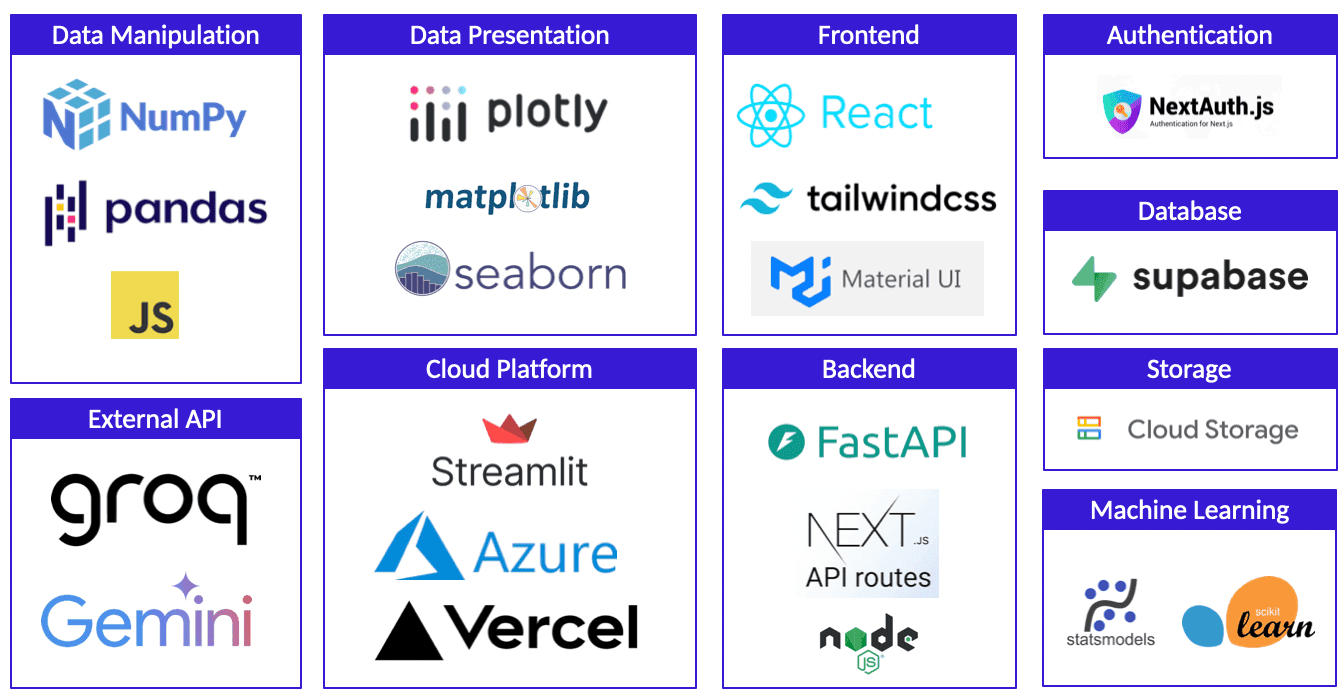
The SupplySense technology stack
Our tech stack was designed to leverage the best of two worlds: the analytical power of Python and the interactivity of modern JavaScript. We employed FastAPI and Streamlit to drive heavy data processing and visualization, while Next.js ensures a high-performance client interface. Key integrations include NextAuth.js for secure authentication and Gemini for generative AI features, all built on top of Supabase for reliable data management.
Capstone Project Showcase
As the closing event of the Master's program, the Capstone Project Showcase was a highlight of the year. We were honored to see high interest from sponsors regarding SupplySense, which led to an exclusive interview feature for the official SCALE video. This final milestone bridged the gap between academic theory and professional practice for me. It confirmed that my skills are best utilized in the consulting space, where I can continue to build digital solutions that solve complex business problems.
Appreciation
We would like to thank Micron Technology for their support in this fruitful collaboration for the past 6 months and providing insights into the semiconductor industry; namely
- Mr Kannan Venkataramanujam, for coordinating between NUS and Micron Technology and providing valuable insights and resources in weekly meetings to ensure positive outcomes for all stakeholders.
- Ms Fonny Yunita, for her feedback on improving the models and simulations, and for taking the time to analyze the results to ensure high-quality deliverables.
- Ms Rene Wang, for her input and discussion with the team for various improvements to the simulations.
- Ms Usha Bhanu Komaragiri, for her time to thoroughly analyze the results and effectively translating the code into meaningful insights.
We would also like to thank NUS SCALE for their efforts in coordinating the deliverables between the different parties.
We would also like to thank Professor Mabel for her invaluable guidance, and continued support, which greatly contributed to the success of our project.